Wainscoting and molding walls use applied trim — picture frames, panels, board and batten or a chair rail — to give a flat drywall wall depth and structure. Most of the molding walls we install cost $2,000–5,500 painted and take 2–3 days on site. Send a photo of your wall and we’ll give you a price range the same day.
What it is and who it suits
Molding is the most traditional accent wall style and often the most affordable. It works in almost any home: classic, transitional, coastal or modern, depending on the profile and color. Painted in one deep color, the frames show up through shadow; painted white against a colored wall, they read as a crisp pattern.
It suits:
- dining rooms, where wainscoting below a chair rail is a classic look;
- bedrooms, behind the bed, full height;
- living rooms and entries that need structure without heavy material;
- hallways and stairways, where lower wainscoting protects the wall from scuffs;
- homes where the owners want something that won’t feel dated in a few years.
Styles
Picture-frame molding
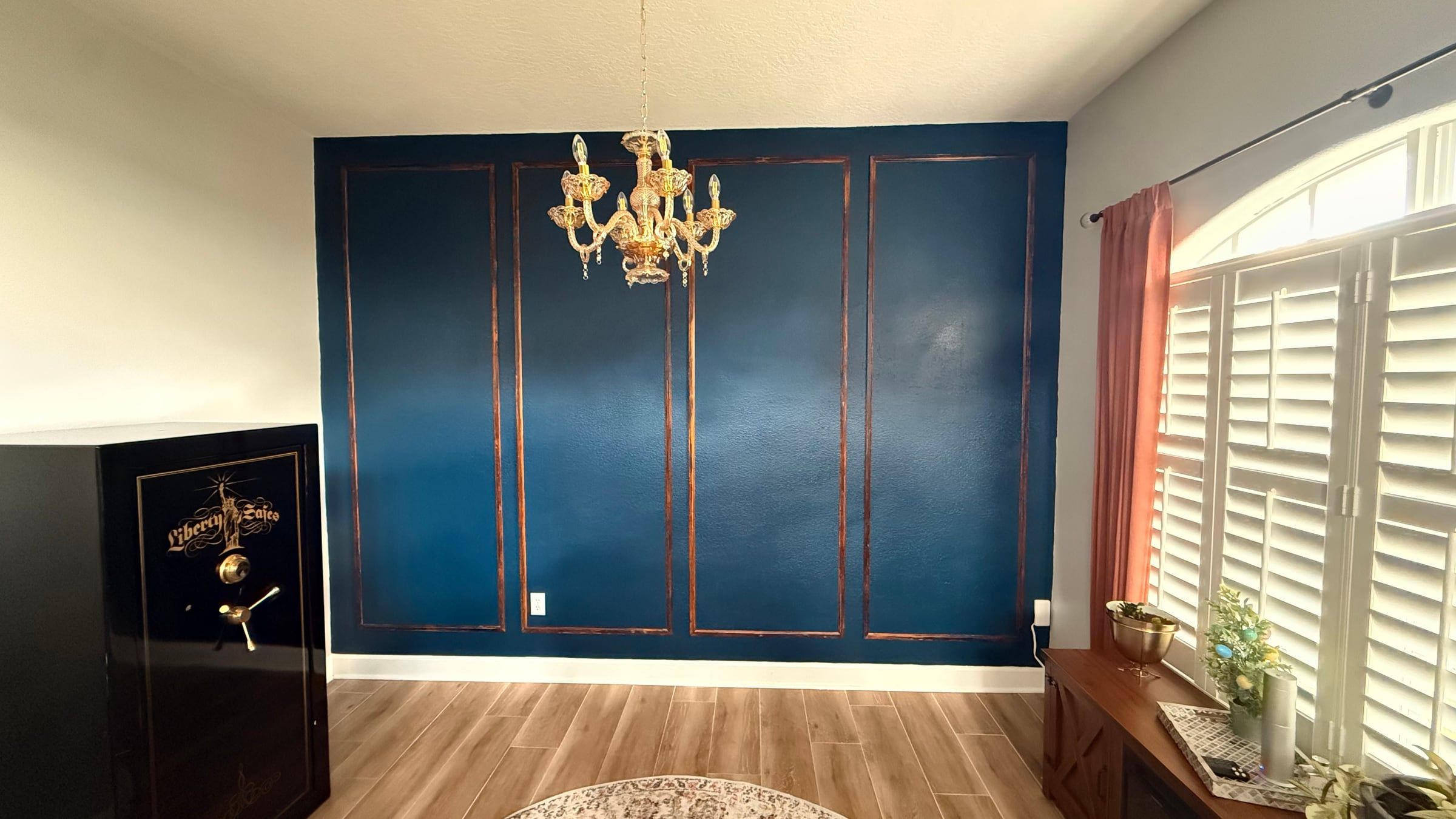
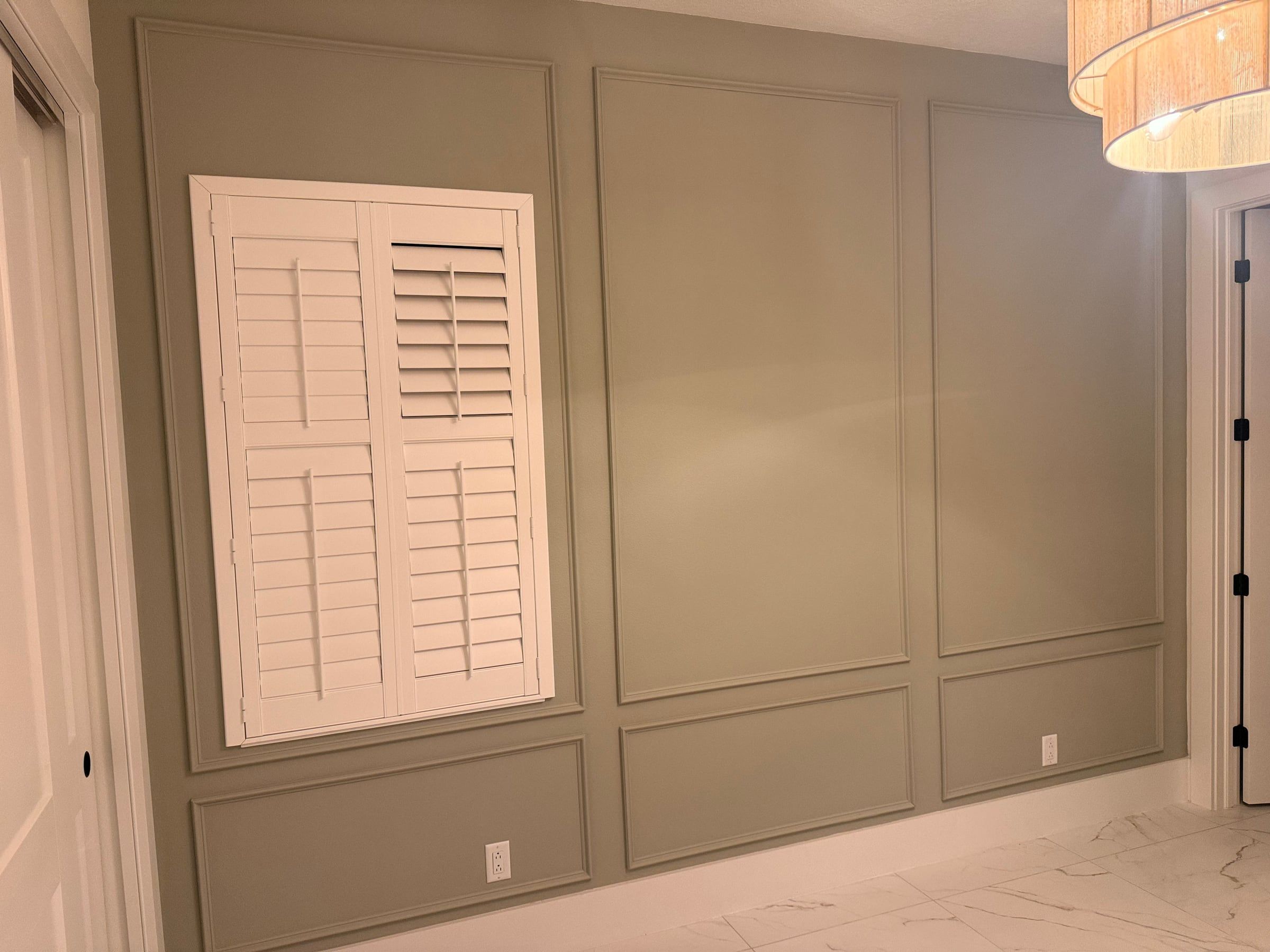
Rectangular frames applied to the wall in a balanced layout. In Melbourne we built a navy painted accent wall with molding frames for about $2,000 in two days. In Loughman we installed painted picture-frame molding for about $2,400 over three days.
Wainscoting with chair rail
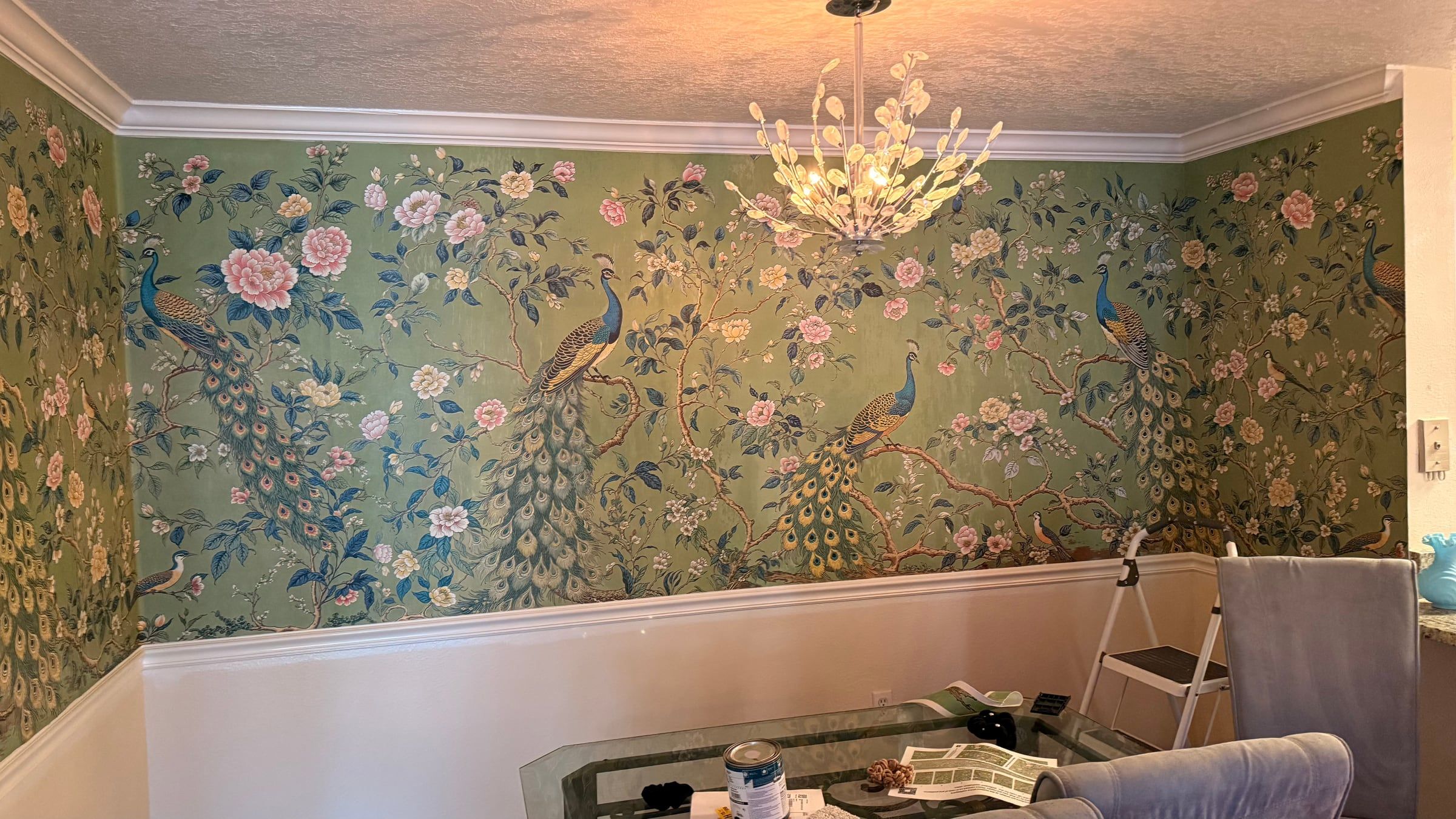
Paneling on the lower third of the wall topped with a chair rail. It pairs well with wallpaper or a contrasting paint color above. In Lake Nona we installed chair rail and lower wall paneling under chinoiserie-style wallpaper for about $1,400 in two days. More on that combination on our wallpaper page.
Board and batten
Flat vertical boards over a smooth backing, sometimes with a horizontal top rail. It’s cleaner and more modern than picture-frame molding, and works full height or as tall wainscoting.
Raised and flat panels
Panel-style wainscoting with a more formal look, used in dining rooms and studies.
Wainscoting in larger projects
Wainscoting also appears as a detail in larger work. Our double-height porcelain slab media wall in Sarasota includes wainscoting as part of the design.
Materials
- Paint-grade MDF and primed trim for frames, battens and panels. It stays straight and paints smoothly.
- Chair rail and cap molding in profiles chosen to match the home’s existing trim.
- Caulk and wood filler for seamless joints.
- Paint — usually a semi-gloss or satin finish for durability.
Getting the proportions right
Molding looks right or wrong mostly because of proportions, not because of the trim itself.
- Wainscoting height. Lower wainscoting usually sits around a third of the wall height. Taller wainscoting, around two-thirds, gives a more modern look and works well with board and batten.
- Frame size. Frames should relate to the wall and to each other. A row of equal frames is calm; a layout with taller frames above shorter ones follows traditional paneling.
- Spacing. The gaps between frames and from the frames to corners, ceiling and baseboard should be consistent. Uneven spacing is the most common reason a molding wall looks off.
- Profile size. Thin trim on a tall wall disappears; heavy trim in a small room overwhelms it. We match the profile to the room and to existing baseboard and casing.
- Color. One color for wall and frames looks modern and calm. White frames on a colored wall look more traditional and graphic.
Where molding works well together with other finishes
Wainscoting below wallpaper is a classic combination. Molding also pairs well with a painted accent color above a chair rail, and with picture-frame molding on the walls of a dining room that has a decorative ceiling. If you’re planning more than one feature, it’s easier to design them together.
What drives the price
- Wall size and height. Full-height layouts use more material and time than lower wainscoting.
- Layout complexity. More frames, more miters.
- Profile. Detailed molding costs more than flat stock.
- Openings. Windows, doors, outlets and vents change the layout and add cuts.
- Wall condition. Uneven walls need more caulking and sometimes repair.
- Paint. Delivered painted versus primed only.
Molding is often the most budget-friendly way to get a custom accent wall. Our Melbourne wall at about $2,000 and our Loughman project at about $2,400 both sit at the lower end of our accent wall range.
Our process
- Send a photo of the wall and rough size.
- Price range the same day. Evenings and weekends, the same business day.
- On-site measurement at a time that works for you. No trip fees anywhere in Central Florida.
- Design, final quote and 50% deposit. We draw the frame layout, agree on profiles and color.
- Build. Most molding walls take 2–3 days.
- Walkthrough and final 50%.
- 1-year workmanship warranty.
Technical details
A good molding wall depends on layout. We measure the wall, mark the centerline, and size the frames so spacing is equal and outlets fall between frames. Miters are glued and pinned, nail holes filled, and every joint caulked before paint. Outlets and switches are extended where needed. All electrical work — outlets, hardwired fireplaces, integrated lighting — is performed by a licensed Florida electrician.
Clear about 3–4 ft in front of the wall and remove art. We protect floors and furniture, vacuum daily, and take our offcuts with us.