Two downtowns and a lagoon
Melbourne is a Space Coast city in Brevard County, about 84,700 residents in the 2020 census. Most of it lies on the mainland, west of the Indian River Lagoon, with downtown Melbourne right on the water. A small piece of the city crosses the lagoon onto the barrier island; that strip, Melbourne Beachside, is often confused with the separate town of Melbourne Beach.
The city actually has two historic centers. Eau Gallie, to the north, was its own city until 1969, when it voted to merge with Melbourne. Its old main street is now the Eau Gallie Arts District, a Florida Main Street since 2010, with galleries and restaurants along the lagoon. Downtown Melbourne grew up separately around its own waterfront.
Houses shaped by the space and defense economy
Melbourne’s growth has long been tied to aviation, defense and space. Naval Air Station Melbourne opened in 1942 to train pilots, the region’s name comes from nearby Cape Canaveral and the Kennedy Space Center, and L3Harris has its headquarters in the city. Growth came over many decades, so housing ranges from older homes near the two historic downtowns to Viera, an unincorporated planned community next to the Melbourne area where construction began only around 1990.
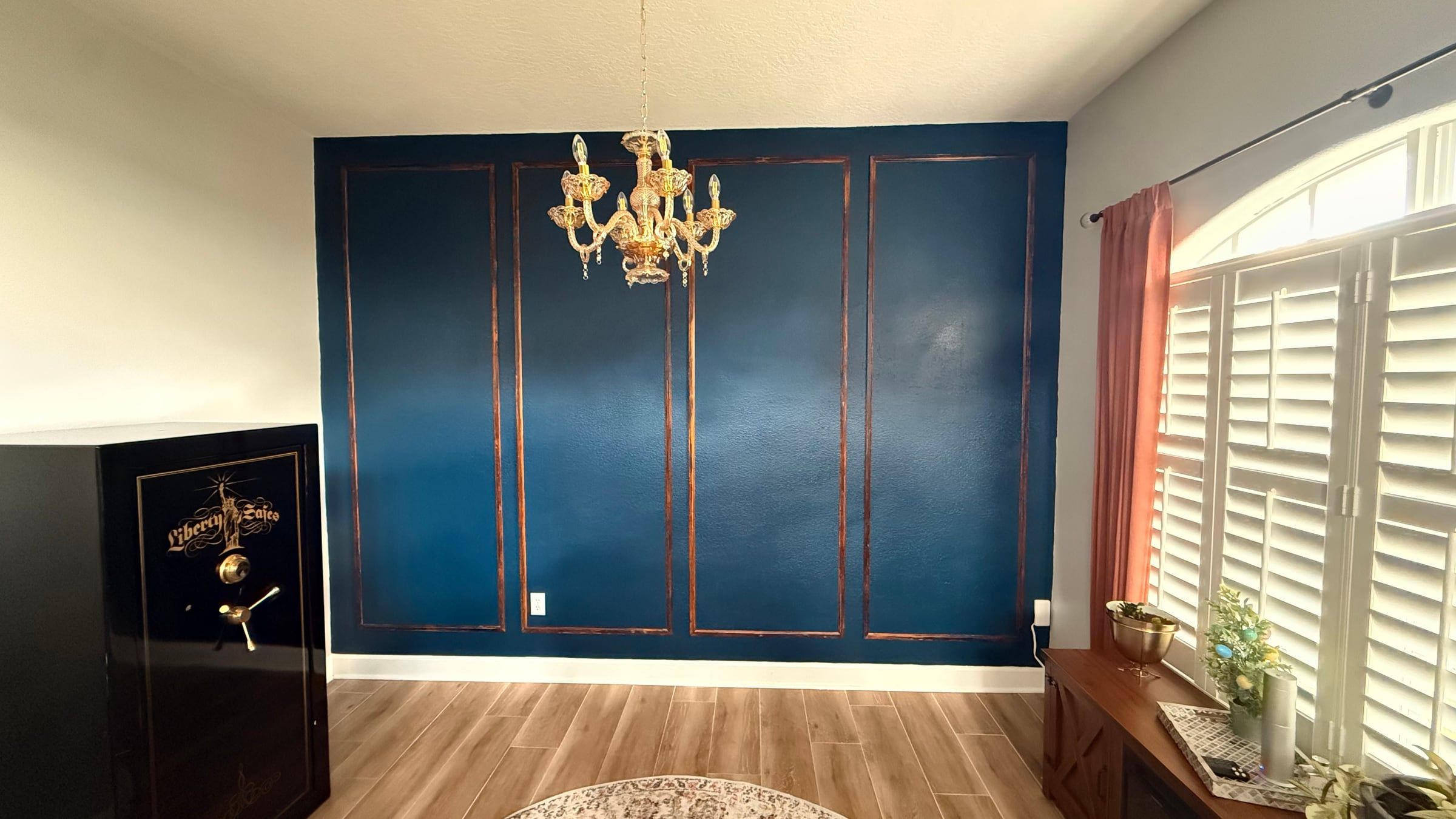
For our work, that means very different starting points. In an older house, the living room may be modest in size, and a painted wall with picture-frame molding or a simple slat feature gives it character without crowding the room. In a newer house with a larger, open great room, a full media wall with a fireplace, display niches and lighting has the space it needs.
What we have built here
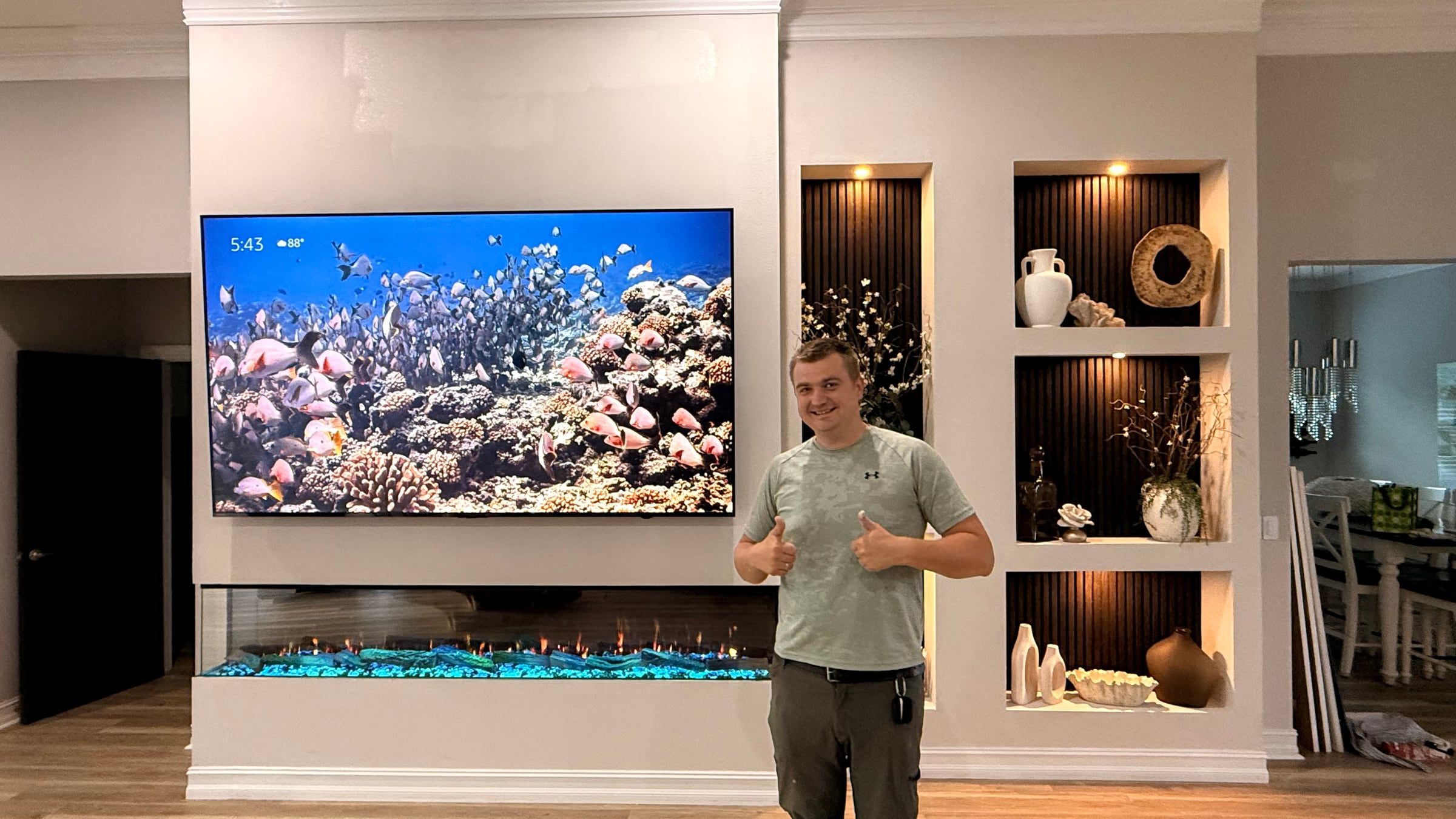
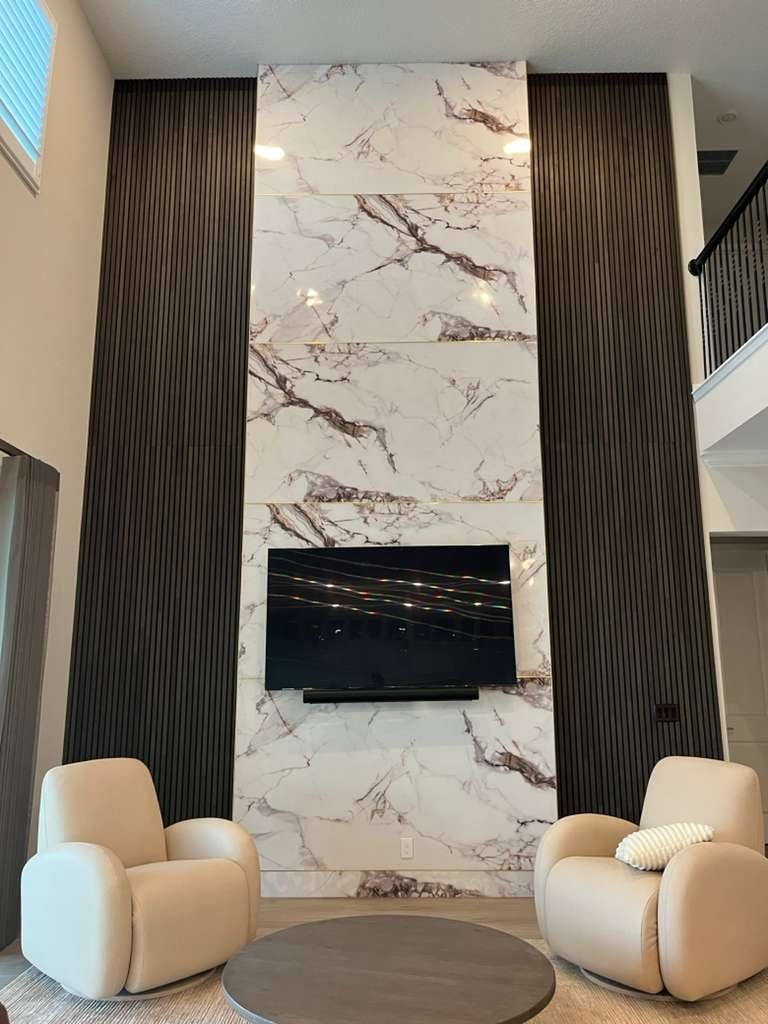
Both ends of that range show up in our Melbourne projects. In June 2026 we finished a navy picture-frame molding wall for about $2,000; work like that is mostly careful layout, caulk and paint. That same month we built a marble-look slab media wall for about $16,000. In September 2026 we completed a media wall with lit niches and a fireplace for about $13,700.
Lit niches and fireplaces need power in the right places before the wall is closed up. We frame the wall, a licensed Florida electrician runs the circuits and lighting, and then we close and finish it, so the wiring is planned rather than patched in afterward.
Coastal conditions, handled plainly
Living near salt water changes a few details. Humidity is the main factor indoors: wood and panel products move as they take on moisture, so we bring materials into the house to acclimate first. On the beachside, salt air is harder on exposed metal, which is why we prefer stainless or coated fasteners there.
Melbourne is about an hour and a quarter to an hour and a half from downtown Orlando. We don’t charge a trip fee, and a photo of your wall gets you a price range the same day.